Write the film.
Program the motion.
Your coding agent writes the screenplay, answers every decision in writing so nothing drifts, and programs each performance as code. AutoMovie computes the same frames every time, as a motion hint for video diffusion.
npx automovie create my-filmdocs/body/screenplay/round/010-round-one.md
# The round
## Round one {#s01}
### Feeling out {#s01-b01}
They circle at kicking range. Kai's jab falls short as Ren sways off it; Ren steps in behind a feint and Kai leans away.
### Ren's combination {#s01-b02}
Jab, cross, lead hook, then the low kick. Kai parries the jab, shells up for the cross and the hook, and checks the kick.
### Kai answers {#s01-b03}
Off the check, Kai's cross lands on Ren's guard and his switch kick on Ren's braced elbow. Ren's rear hook misses as Kai rolls under it.
### The teep {#s01-b04}
Kai's teep drives Ren back a step. Ren walks straight back in.
### The finish {#s01-b05}
A feinted jab draws Kai's guard high. A hook to the liver folds him, and the head kick puts him down.
kickboxing-round. Every replay draws the same frames.A video model invents motion.
A motion hint tells it what happens.
A prompt can describe a fight. It cannot put a fist on a jaw at 4.2 seconds, keep both feet on the floor through the turn, or make the next take match this one. The model fills in what the words leave out, differently every time.
AutoMovie gives the model who is where, what they do, what they touch and when. It renders a hint video and the control channels the model takes (pose, depth, normal, outline and mask) from one performance, aligned frame for frame.
From a decision to a frame,
nothing drifts.
A short runs brief to screenplay; a series runs settings, treatments and scripts first. Each layer states in writing how it keeps the world, the characters, the places and the era decided above it, and the code states how it plays the screenplay, so the film keeps to both. The authoring chain
- 1
Decide
The brief gives each character, place and recurring prop a record, and settles every rule the premise depends on: a fighter's stance, his temper, the ring. The screenplay must answer each one.
docs/body/brief/cast/ren.md
# Ren ## Stance {#stance} Orthodox. Leads with the left hand and kicks off the rear leg. ## Temper {#temper} Presses forward and takes a hit to land one. - 2
Write
The screenplay is the last place a decision is made. One file per scene, one heading per beat, and each beat records who is in it, what they intend, what comes of it and where the camera stands.
docs/body/screenplay/round/010-round-one.md
### Feeling out {#s01-b01} - Cast: [Ren](../../brief/cast/ren.md#stance), [Kai](../../brief/cast/kai.md#guard) - Intent: both find the range at kicking distance; neither commits. - Outcome: Kai's jab falls short; Ren's feint draws Kai back. - Camera: side, full shot, both fighters in frame. - 3
Program
The agent composes each performance from typed actions and states, beside the code, how it plays each beat. An action the vocabulary lacks does not type-check; a placement the body cannot reach is refused with the reason and a fix.
src/composition/scenes/round/010-round-one/firstExchange.ts
const Chain = HumanChain.extend({
  jab, cross, leadHook, rearHook, roundKick, switchKick, teep,
  leanBack, pushed, swayBack, handParry, cover, checkKick,
  rollUnder, highBlock, braceImpact, victory,
});
const face = at("blu", "face");

/**
 * @evidence docs/body/screenplay/round/010-round-one.md#s01-b01
 *   Both circle; Kai's jab falls short, Ren's feint draws him back.
 * @evidence docs/body/screenplay/round/010-round-one.md#s01-b02
 *   Jab, cross, hook and the low kick: parried, covered, checked.
 */
export const firstExchange = {
  ren: Chain.subject("red")
    .guard({ seconds: 0.5, style: "kickboxing", facing: face })
    .step({ direction: "right", steps: 2 })
    .leanBack({ from: at("blu", "handBackLeft") }, "kr-lean")
    .step({ direction: "forward", steps: 1 })
    .jab({ at: face, feint: 0.4 }, "kr-feint")
    .step({ direction: "forward", steps: 1 })
    .jab({ at: face }, "kr-jab")
    .cross({ at: at("blu", "chin") }, "kr-cross")
    .leadHook({ at: at("blu", "jawRight") }, "kr-hook")
    .roundKick({ at: at("blu", "thighOuterLeft") }, "kr-low"),
  kai: Chain.subject("blu")
    .guard({ seconds: 0.5, style: "kickboxing", facing: at("red", "face") })
    .step({ direction: "left", steps: 2 })
    .jab({ at: at("red", "face"), accuracy: "miss" })
    .sync({ of: "kr-lean", event: "stroke", align: "impact" })
    .swayBack({ against: "kr-feint" })
    .handParry({ against: "kr-jab" })
    .cover({ against: "kr-cross" })
    .checkKick({ against: "kr-low" }),
};
- 4
Answer
Every beat answers in writing for each principle and decision it keeps.
pnpm run evidencefails while one is left without its answer, and the error list is the agent's list of work, so it cannot report a scene done while one is open.docs/evidence/construction/units/screenplay/round/010-round-one.md
# docs/body/screenplay/round/010-round-one.md#s01-b02

## @evidence contracts/story/principles/screenplay.md#beat-decisions

The beat decides its intent and outcome: Ren commits to the whole combination, and Kai defends every strike of it.

## @evidence brief/cast/ren.md#temper

Ren presses in behind the feint and throws all four strikes into Kai's guard, as his temper decides.

## @evidence brief/cast/kai.md#guard

Kai answers each strike with a defence his guard allows: a parry, a shell and a check.
- 5
Render
The engine computes each frame from the code and a seed. A defect is found on a still, fixed in the module that caused it and recomputed at the same second, never regenerated.
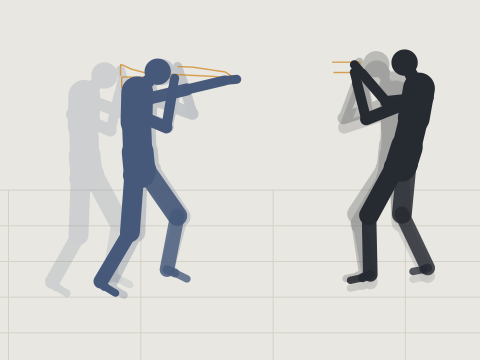
- hint video
- pose
- depth
- normal
- outline
- mask
Every decision, answered in writing.
Every principle and every decision is an obligation: the beat or the code that keeps it must say how, or why it does not apply. That is how a world, its people, its places and its era hold without a slip from the brief to the screenplay to the frames. Point at a node to see what it answers to. Then delete one statement.
$ pnpm run evidence
…
Coverage: 42/42 units covered, 0 missing.
Diagnostics: 0 errors, 0 warnings.
exit 0
Point at a node to read the statement that answers it.
An abridged report in the format @wrtnlabs/evidence prints, for this example.
Separate reviewers
The author, the answerer and the reviewer work in separate contexts, and the reviewer reads the screenplay without its answers.
Reviews expire
A review is tied to the text it read; edit a beat and its review is stale until it is read again.
Acceptance
The acceptance record names who examined the frames and who watched the film at normal speed.
Any human action, the same few lines.
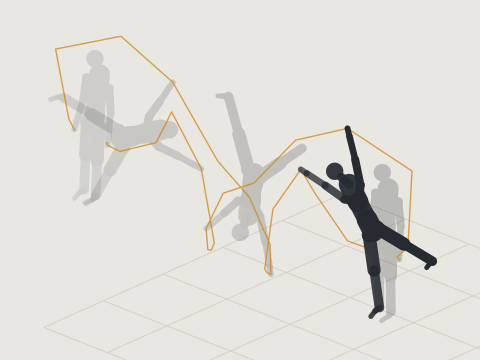
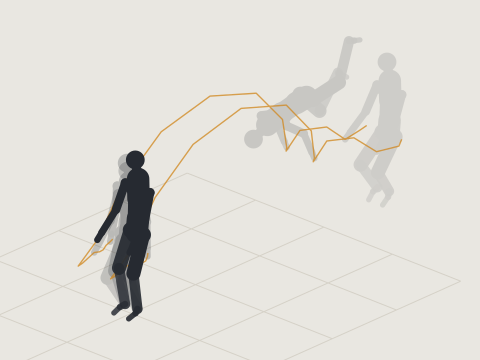
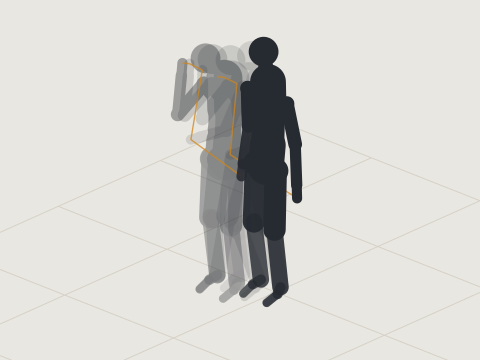
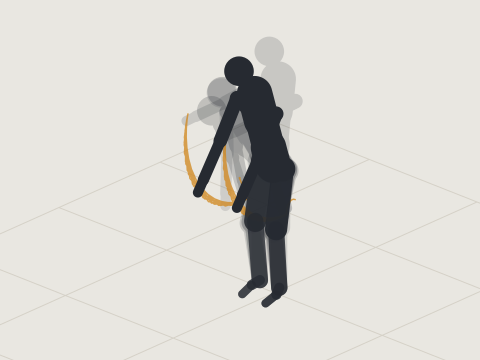
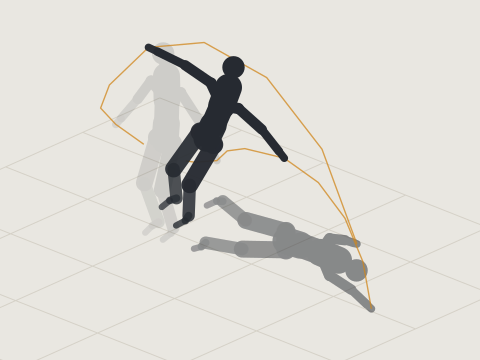
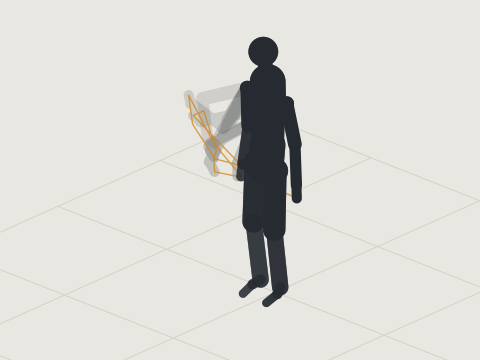
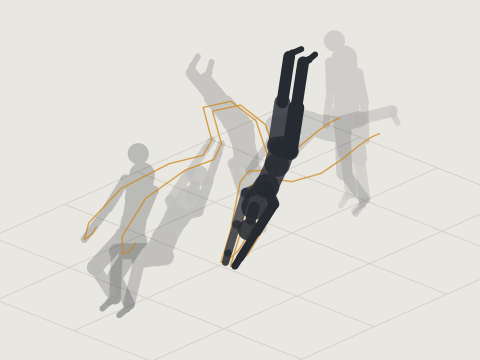
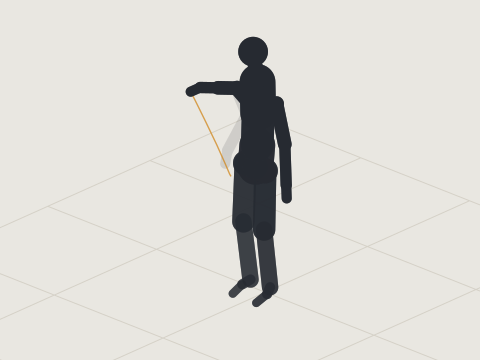
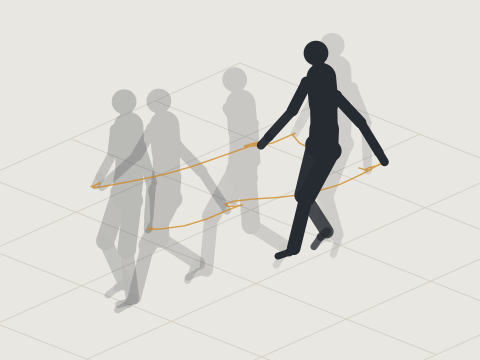
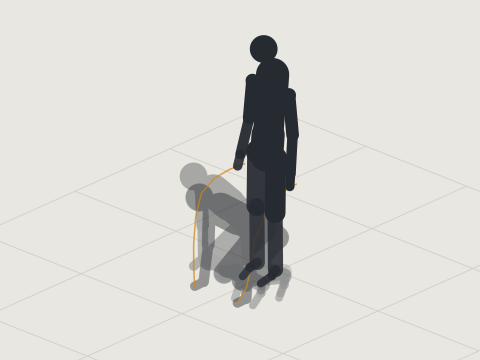
The engine solves the primitives: a hand reaching its target, a foot planted, a grip closed, the balance kept, an instant timed to another body. Every action is a typed call over them, and actions chain, overlay and sync into a performance, so a jab, a handshake and a cartwheel are written the same way. What the library lacks, a production adds as one more action of its own.
Simple bodies.
Precise motion.
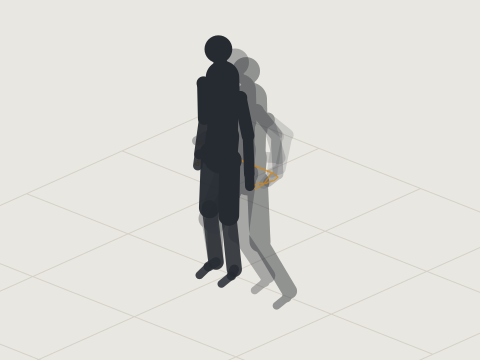
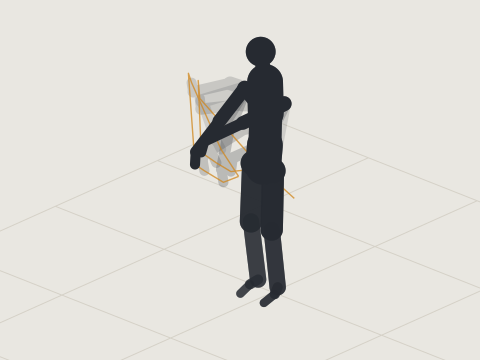
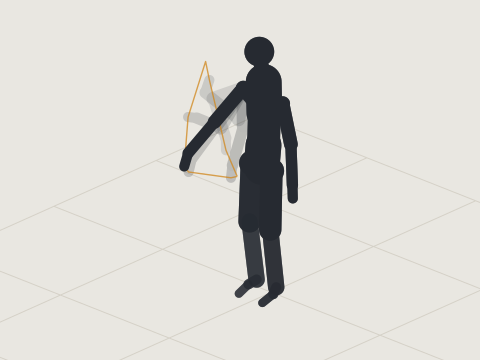
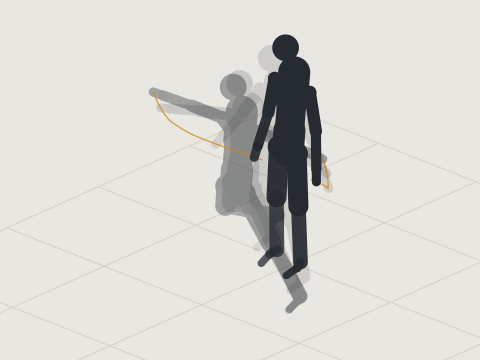
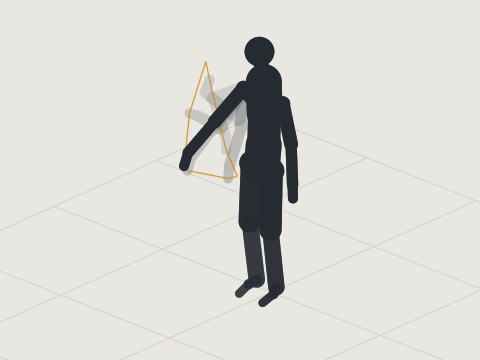
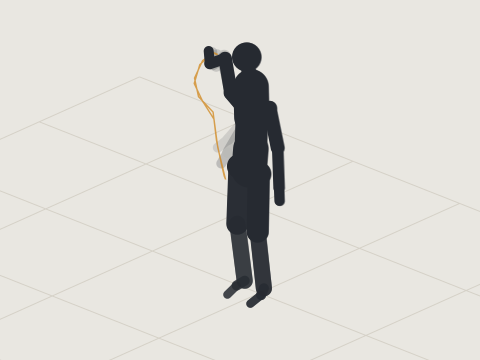
People are a polygon man and sets are coarse models, on purpose: a video model supplies the surfaces. The accuracy goes into the performance. A fist meets the struck region, each foot lands on the floor at its step, both hands close on a grip, all scaled to the body that performs it.
One composition plays the same way every time. A seed changes how and when, never what. Change the bodies or the skill and the same code fits them.
Motion as codesrc/composition/scenes/round/010-round-one/secondExchange.ts
import { firstExchange } from "./firstExchange";

/**
 * @evidence docs/body/screenplay/round/010-round-one.md#s01-b03
 *   Kai's cross and switch kick blocked; Ren's hook rolled under.
 * @evidence docs/body/screenplay/round/010-round-one.md#s01-b04
 *   Kai's teep, and Ren straight back in.
 * @evidence docs/body/screenplay/round/010-round-one.md#s01-b05
 *   The feint, the liver hook and the head kick; Kai goes down.
 */
export const secondExchange = {
  ren: firstExchange.ren
    .guard({ seconds: 0.5, style: "kickboxing" }, "kr-shell")
    .braceImpact({}, "kr-brace")
    .guard({ seconds: 0.4, style: "kickboxing" })
    .rearHook({ at: at("blu", "jawLeft") }, "kr-counter")
    .guard({ seconds: 0.8, style: "kickboxing" })
    .pushed({ from: at("blu", "soleRight") }, "kr-teeped")
    .step({ direction: "forward", steps: 1 })
    .jab({ at: at("blu", "face"), feint: 0.5 }, "kr-feint2")
    .leadHook({ at: at("blu", "liver") }, "kr-body")
    .roundKick({ at: at("blu", "templeLeft") }, "kr-ko")
    .victory(),
  kai: firstExchange.kai
    .cross({ at: at("red", "chin") })
    .sync({ of: "kr-shell", event: "set", align: "impact" })
    .switchKick({ at: at("red", "ribsRight") })
    .sync({ of: "kr-brace", event: "start", offset: 1.3, align: "impact" })
    .rollUnder({ against: "kr-counter" })
    .teep({ at: at("red", "abdomen") })
    .sync({ of: "kr-teeped", event: "start", align: "impact" })
    .highBlock({ against: "kr-feint2" })
    .flinch({ from: at("red", "handBackLeft"), intensity: 0.8 })
    .sync({ of: "kr-body", event: "impact" })
    .knockdown({ from: at("red", "footTopRight"), seconds: 2 })
    .sync({ of: "kr-ko", event: "impact" }),
};
Start a production.
Create it and install.
npx automovie create my-filmcd my-film && pnpm installOpen it in a coding agent that reads AGENTS.md or CLAUDE.md, and say what to make.
Write a three-minute short about two sparring partners whose friendly round stops being friendly. Deliver the motion hint.
The agent asks which decisions you keep, records them in PROJECT.md, writes the screenplay, programs the scenes and hands you the hint with what it verified.